Edge Technology & Capabilities
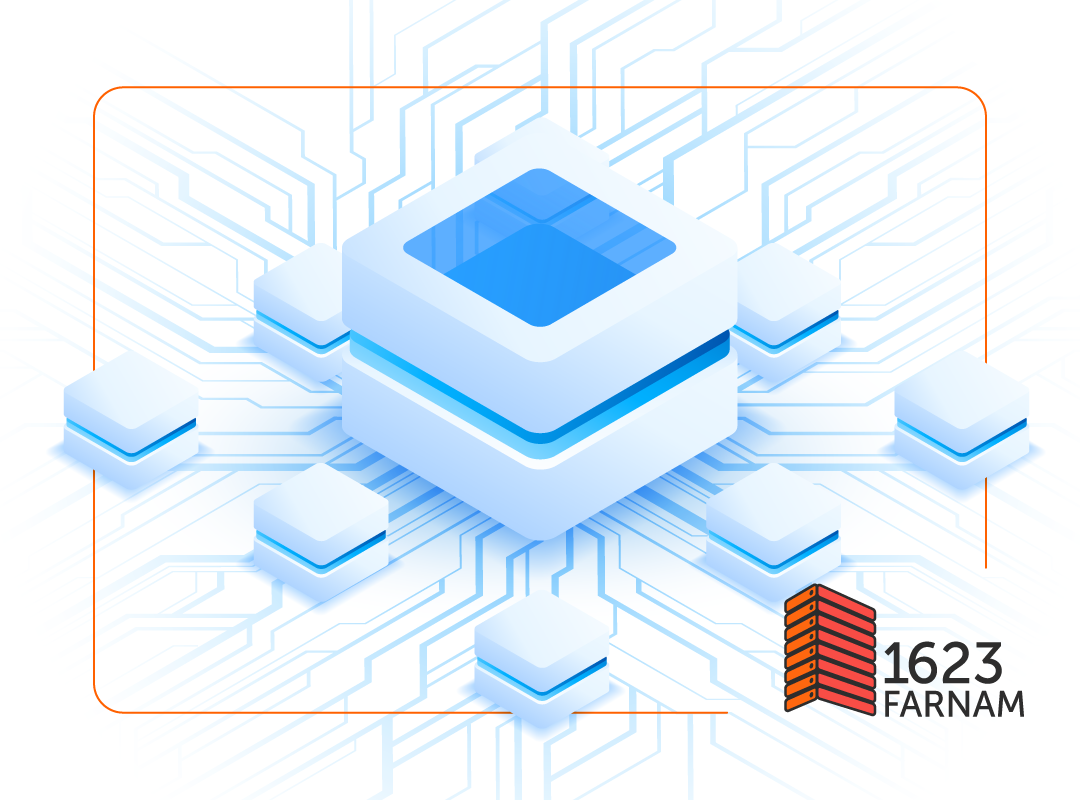
Edge technology is redefining how data is processed, analyzed and delivered. By bringing computing closer to the end user, edge technology empowers businesses and applications with low latency, real-time data processing and enhanced performance.
At 1623 Farnam, we are at the forefront of enabling edge computing solutions that power the future of connectivity, innovation and user experiences.
What is Edge Technology?
Edge technology refers to the distributed computing framework that processes data closer to its source rather than relying on centralized data centers. By reducing the physical distance that data needs to travel, edge technology supports applications that require low latency, rapid data analysis and seamless interaction. This is particularly critical in industries like 5G edge computing, AI edge computing, virtual reality, augmented reality and cloud gaming.
Edge Technology Capabilities
Enabling Next-Generation Edge Applications in the Midwest
The evolution of edge computing is being driven by applications that demand ultra-low latency, high bandwidth and direct interconnection with carriers and cloud platforms. From wireless backhaul to immersive AR experiences, today’s digital workloads cannot rely solely on centralized hyperscale regions.
1623 Farnam’s Omaha Edge platform, spanning OMA-1 and the expanding OMA-2 facility, provides the dense carrier interconnection and cloud proximity required to power latency-sensitive, distributed applications across the Midwest.
Our interconnection-first architecture enables real-time performance for industries transforming how data is processed, delivered and experienced
Ideal use cases:
- 5G core interconnection
- Mobile edge computing (MEC)
- Fixed wireless aggregation
- Rural broadband backhaul
Wireless & 5G Infrastructure
The rapid expansion of 5G and fixed wireless access is pushing compute closer to users.
Wireless operators require:
- Low-latency aggregation points
- High-capacity backhaul
- Direct peering with content and cloud providers
- Network diversity for resiliency
1623 Farnam supports wireless carriers and broadband providers with carrier-neutral interconnection, meet-me-room cross connects and scalable deployment options.
Omaha’s central location makes it an ideal aggregation point for regional and national wireless traffic.
Cloud & Edge Gaming
Cloud gaming platforms and real-time streaming services demand minimal latency between compute resources and end users. Even small delays degrade user experience.
Our Omaha edge environment supports:
- Direct cloud on-ramps
- High-capacity carrier access
- Local peering through Omaha IX
- Reduced network hops between regions
By placing infrastructure at the Midwest edge, gaming providers can improve responsiveness, minimize buffering and enhance competitive gameplay experiences across central U.S. markets.
AR / VR & Immersive Experiences
Augmented reality (AR) and virtual reality (VR) applications require near-instantaneous data processing to prevent lag and motion sensitivity.
Edge deployments at 1623 Farnam support:
- Real-time rendering offload
- Distributed compute nodes
- High-bandwidth transport
- Ultra-low-latency connectivity
From enterprise training simulations to immersive retail environments and live event streaming, AR/VR platforms benefit from proximity-based compute and direct network interconnection.
Healthcare & Telemedicine
Healthcare innovation increasingly depends on real-time data exchange and secure cloud connectivity.
Applications include:
- Remote patient monitoring
- Telemedicine platforms
- Medical imaging transfers
- IoT-enabled medical devices
- Secure electronic health record (EHR) connectivity
1623 Farnam supports healthcare organizations with:
- Secure, private cloud connectivity
- Carrier diversity for uptime
- Compliance-aligned infrastructure
- Redundant power and 24/7 security
Omaha’s edge position enables faster access to patient data while maintaining operational resilience.
Manufacturing & Industrial IoT
Modern manufacturing environments rely on connected sensors, automation systems and real-time analytics.
Edge interconnection supports:
- Industrial IoT aggregation
- Predictive maintenance analytics
- Supply chain tracking
- Robotics control systems
- Private network backhaul
By localizing compute at the Midwest edge, manufacturers can reduce latency between facilities and analytics platforms while maintaining secure, private connectivity.
Retail & Real-Time Consumer Experiences
Retail operations are becoming increasingly data-driven. From inventory systems to immersive shopping environments, retail networks demand performance and reliability.
Edge deployments at 1623 Farnam enable:
- Real-time POS data synchronization
- E-commerce acceleration
- Inventory tracking systems
- Smart store technologies
- Secure payment processing connectivity
Carrier diversity and cloud on-ramps ensure retailers can maintain uptime and responsiveness across distributed store networks.
Built for Edge Scalability
1623 Farnam’s Omaha Edge platform is designed to scale with next-generation applications.
With more than 50 network providers, direct cloud connectivity and a growing two-facility ecosystem, customers gain:
- Reduced latency
- Improved traffic localization
- Lower transport costs
- High-density peering
- Multi-site resiliency strategies
As AI-driven applications and distributed computing continue to expand, the Midwest edge becomes increasingly critical—and 1623 Farnam is positioned at its center.
How We Works
Our Working Process
Lorem ipsum dolor sit amet, consectetur adipiscing elit, sed do eiusmod tempor incididunt ut labore et dolore magna aliqua.
Choose Your Service
Lorem ipsum dolor sit amet consecte.
01.
Make Appointment
Lorem ipsum dolor sit amet consecte.
02.
Go To Your Place
Lorem ipsum dolor sit amet consecte.
03.
Enjoy Your Service
Lorem ipsum dolor sit amet consecte.
04.
Need Our Help ?
Don't Hesitate To Contact Us
Frequently Asked Questions
AI inference, content delivery, private cloud connectivity, VoIP, financial trading, wireless backhaul and latency-sensitive applications.
Yes. It will extend private cloud access and carrier interconnection density.
Yes. Customers can architect resilient deployments across both Omaha sites.
The dual-site model supports traffic localization and regional edge processing strategies.
Wireless, cloud gaming, AR/VR platforms, healthcare providers, manufacturers and retailers all benefit from low-latency interconnection and cloud proximity.
Edge deployments place compute resources closer to end users, reducing network hops and improving application responsiveness.
Yes. We provide private cloud on-ramps and direct interconnection to major carriers and cloud platforms.
Yes. Customers can design multi-site strategies across OMA-1 and OMA-2 for resiliency and scalability.
Yes. The expanding Omaha platform supports latency-sensitive, distributed AI infrastructure.